

Qubox
Qubox is a mobile platform designed to connect skilled artisans with individuals and businesses looking for reliable service providers. The platform helps artisans create professional profiles, showcase their work, receive ratings and reviews, and get matched with relevant job opportunities based on skill, location, and availability. The project focused on solving trust, accessibility, and discoverability challenges within the artisan marketplace while creating a seamless hiring experience for customers.
Target users:
Independent Professionals / Freelancers / Entrepreneurs
Role:
UX/UI Product Designer
Duration:
8 weeks
Platform:
Movile Application(Android & iOS)
Tools:
Figma, FigJam, Google Forms, Notion, Maze, Adobe Illustrator
Overview
Qubox is a mobile platform that connects skilled artisans with job opportunities, empowering them with visibility, credibility, and consistent income.
Research
Problem Statement
In many communities, finding trusted artisans such as electricians, plumbers, carpenters, tailors, painters, and mechanics is often difficult and time-consuming.
Most customers rely heavily on word-of-mouth referrals, which creates several problems:
1. Difficulty verifying artisan credibility
2. Lack of transparent pricing and reviews
3. Poor communication between clients and artisans
4. Limited visibility for skilled artisans
5. Missed job opportunities due to poor accessibility
6. No centralized platform for matching services efficiently
At the same time, many artisans struggle to market themselves digitally and secure consistent work opportunities.
Goal
Design a mobile-first platform that:
1. Helps users quickly find and hire trusted artisans.
2. Allows artisans to build professional digital profiles.
-
3. Creates a transparent review and rating system.
4. Simplifies job discovery and booking.
-
5. Improves trust and communication between both parties.
6. Provides a smooth and intuitive user experience for users with varying digital literacy levels.
My Role
As the UX/UI Product Designer, I was responsible for:
1. User research
2. Competitive analysis
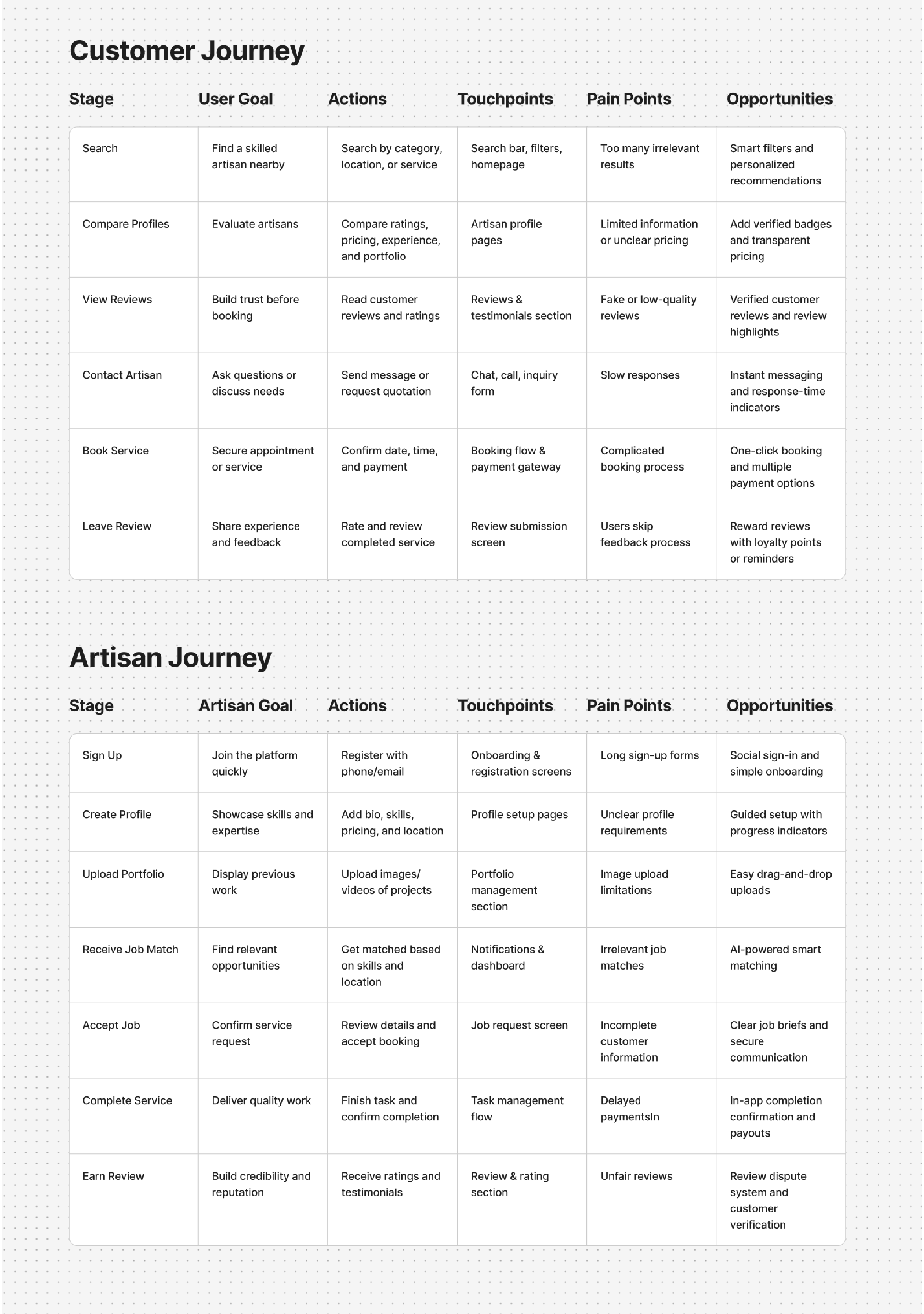
3. User journey mapping
-
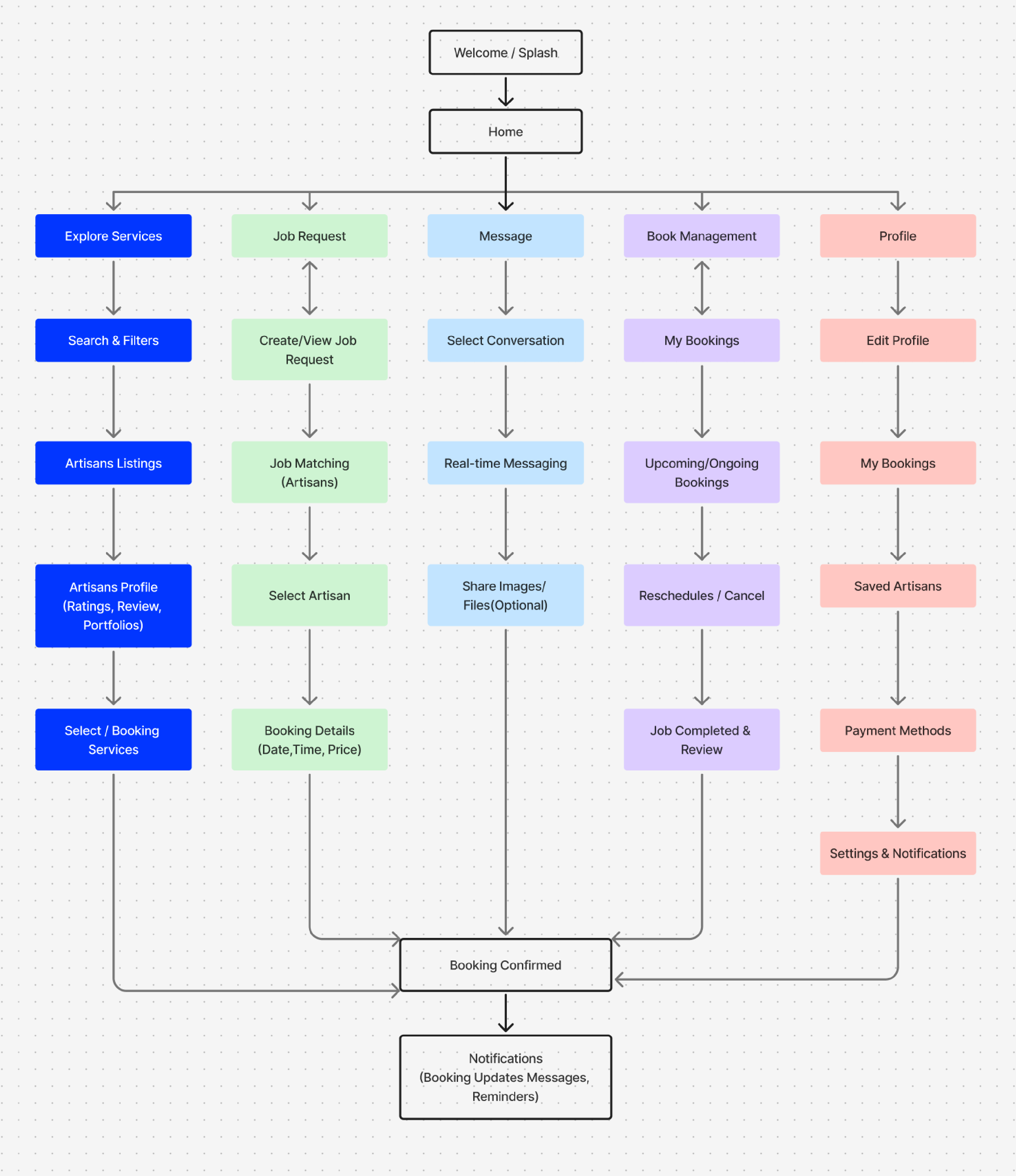
4. Information architecture
5. Wireframing
6. UI design system creation
7. High-fidelity mobile UI design
-
8. Interaction design
9. Prototype testing
10. UX improvements based on feedback
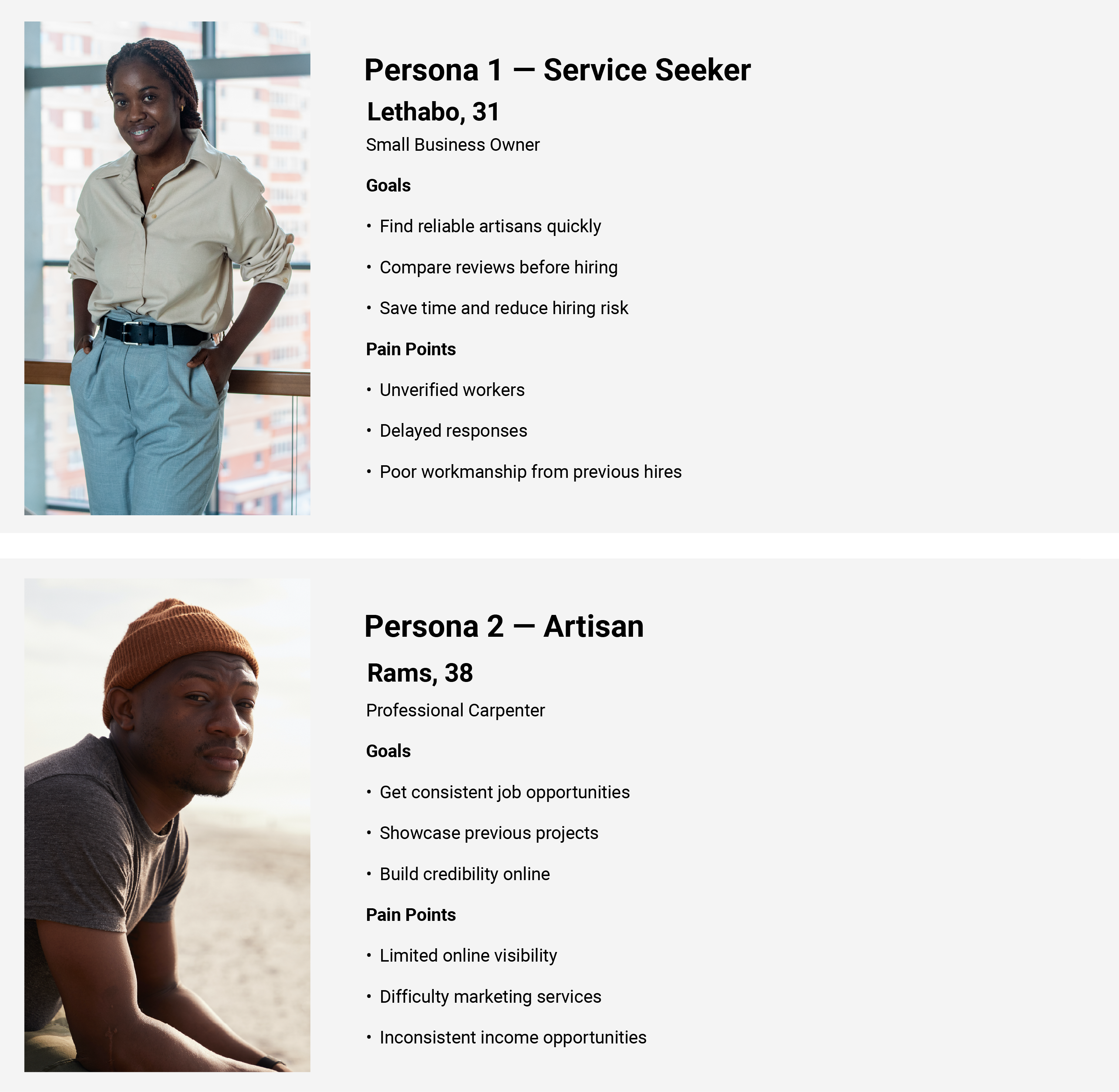
User Persona
Design
The approach
Research Process
User Research
To better understand user pain points, I conducted:
1. User interviews with artisans and service seekers.
2. Online surveys.
3. Competitor analysis.
4. Marketplace behavioral research.
Key Findings
Competitive Analysis
Information Architecture
The app structure was designed to be simple and highly task-oriented.
Design Process
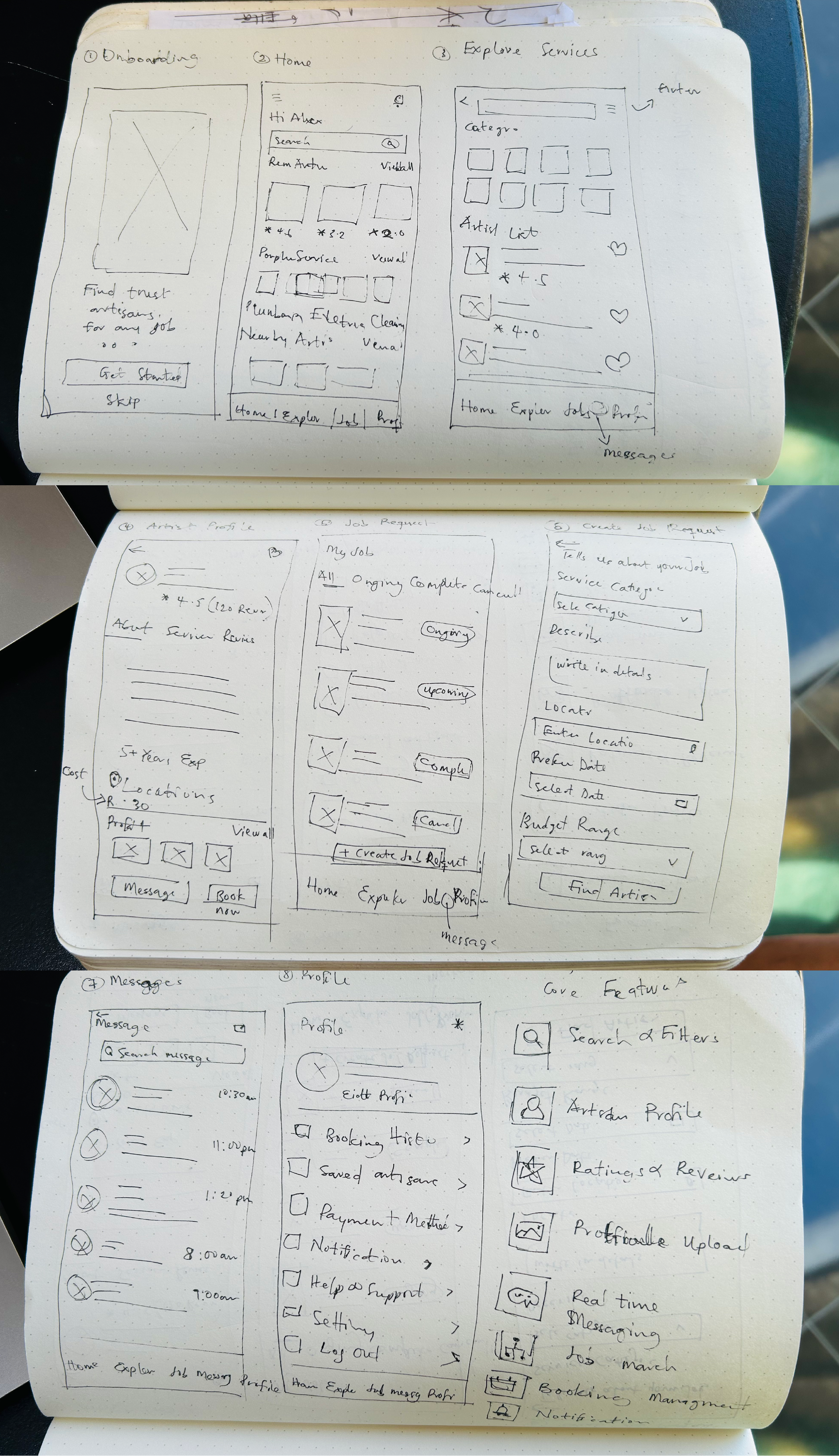
Low-Fidelity Wireframes
I started with quick sketches and low-fidelity wireframes to validate layout structures and user flows.
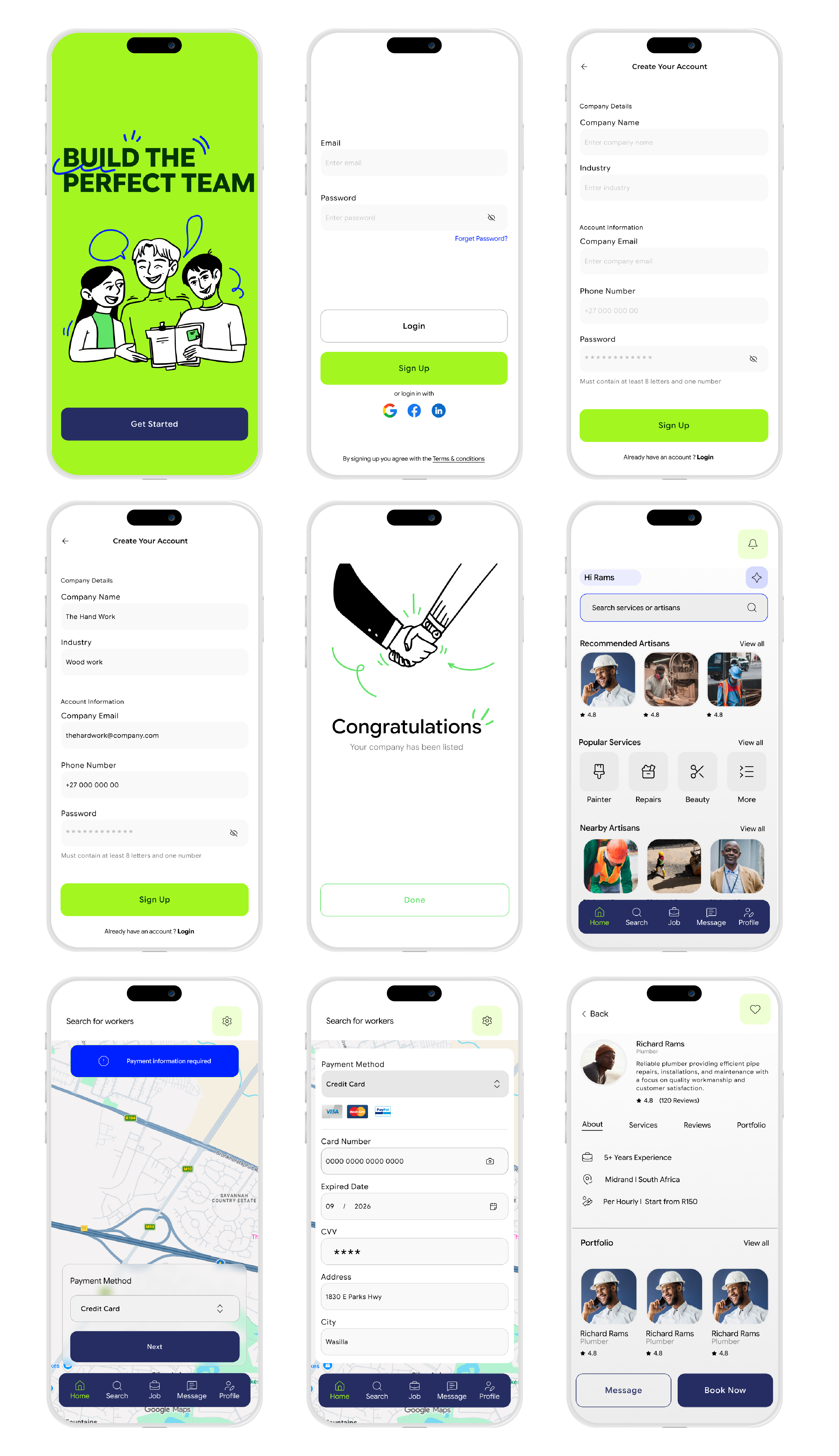
High-Fidelity UI Design
The high-fidelity designs transformed early concepts into a polished, user-centered mobile experience that balanced functionality with visual appeal. Every screen was crafted to feel modern, intuitive, and trustworthy while maintaining a seamless user journey from discovery to booking.
Business Impact
Expected Product Impact
- 1. Increased artisan visibility and job opportunities
- 2. Faster customer hiring decisions
- 3. Higher trust and engagement rates
- 4. Improved retention through personalized recommendations
- 5. Stronger marketplace scalability
What I Learned
This project reinforced the importance of:
- 1. Designing for trust in service marketplaces
- 2. Simplifying complex workflows for diverse users
- 3. Balancing business goals with user needs
- 4. Creating accessible mobile experiences
- 5. Using research to guide design decisions
I also learned how critical onboarding and verification systems are in two-sided marketplace products.
Conclusion
Qubox was designed to solve a real-world problem by creating a trusted digital ecosystem where artisans can grow their businesses and customers can confidently hire skilled professionals. The project combined user-centered design thinking, marketplace strategy, and scalable UI systems to deliver an intuitive and impactful mobile experience. This case study demonstrates my ability to:
- 1. Solve complex UX problems
- 2. Design scalable mobile products
- 3. Conduct user-centered research
- 4. Translate business goals into intuitive interfaces
- 5. Create thoughtful and accessible user experiences